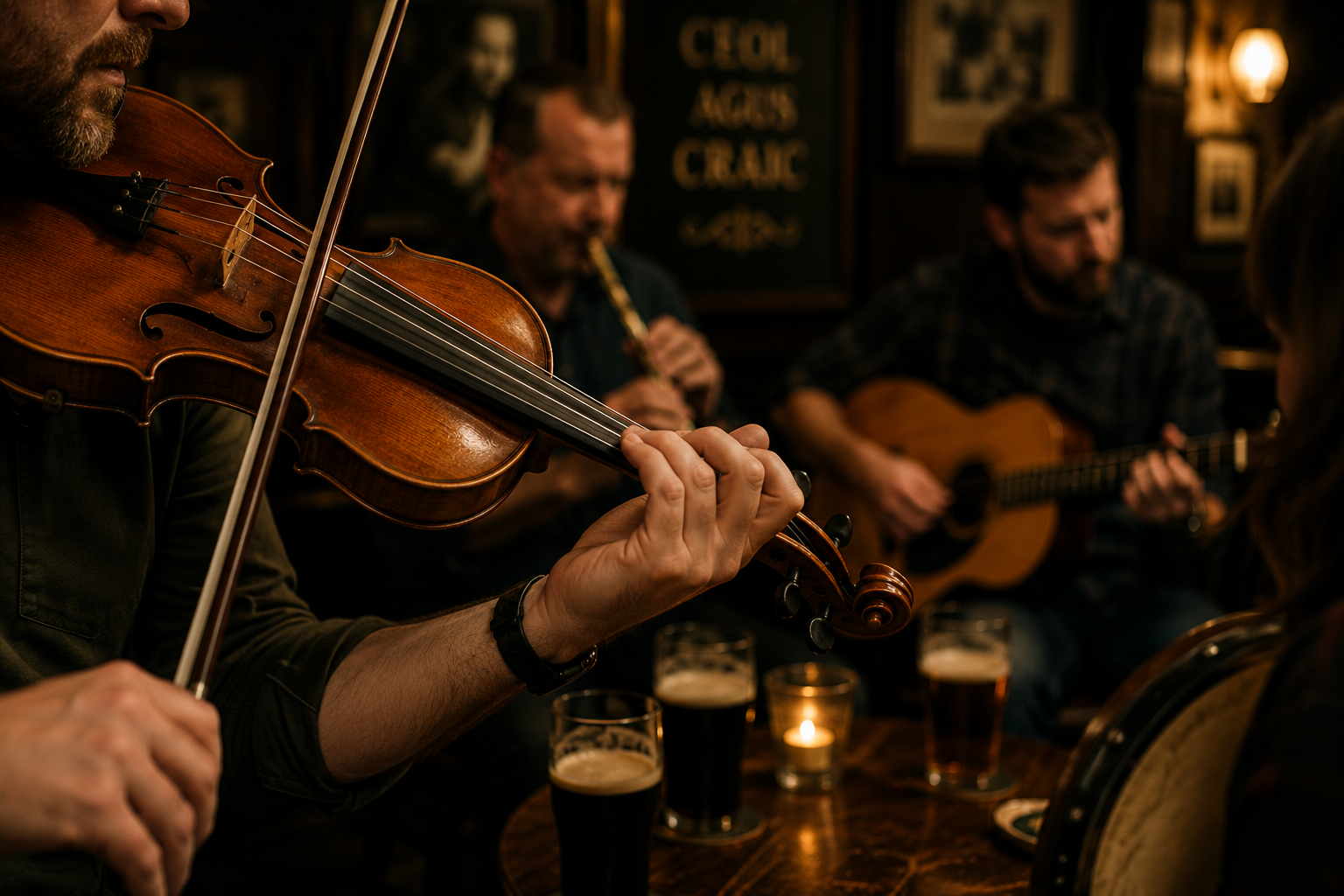
A session is not a concert. That's the first thing you need to understand. When musicians gather in the corner of an Irish pub on a Tuesday night, they're not performing for you. They're playing for each other, and you're welcome to listen. This distinction is everything.
How a Session Works
There are no setlists, no sound checks, no tickets. Someone starts a tune — usually a reel or a jig — and others join in, matching the key and the tempo by ear. The music builds in layers: fiddle, flute, concertina, bodhrán, guitar. Each player adds their own ornamentation, their own feel, while staying within the structure of the tune. It's improvisation within tradition, and when it locks in, the sound is extraordinary.
Sessions have etiquette, though it's rarely written down. You don't join unless you can keep up. You don't play louder than everyone else. You don't request "Danny Boy." The person who starts a set of tunes has the floor until they're finished. Between sets, there's chat, there are drinks, and there's the quiet negotiation of what to play next.
The Tunes Themselves
Irish traditional music has a repertoire of thousands of tunes, many of them centuries old. A good session musician might know five hundred by heart. The tunes have names — "The Bucks of Oranmore," "The Coalminer's Reel," "Drowsy Maggie" — and stories behind them, though the stories vary depending on who's telling them.
What strikes newcomers is how joyful the music sounds, even in minor keys. There's a lift to Irish trad that makes your foot move before your brain catches up. The rhythms are dance rhythms, designed to move bodies, and even sitting in the corner of a pub you'll feel it in your chest.
Where to Find One
Sessions happen across Ireland, every night of the week. The best ones tend to be in smaller pubs in smaller towns, where the musicians are locals and the atmosphere is unselfconscious. Doolin in County Clare is famous for its sessions, though regulars will tell you the quality has suffered with tourism. Westport, Ennis, Miltown Malbay — these are towns where the music is as natural as the weather.
Why It Endures
The session survives because it meets a human need that hasn't changed in centuries: the need to make something together, in real time, without a screen or a score. It's democratic, intergenerational, and stubbornly analogue. In a world that's increasingly mediated, the Irish session remains one of the most authentic communal experiences you can have. Pull up a chair, order a drink, and listen.