To understand Ireland, you have to understand leaving it. Emigration is not a footnote in Irish history — it is the history, running through every generation like a river that never quite finds the sea. The story of the Irish diaspora is one of loss, reinvention, and an extraordinary ability to build home in unfamiliar places.
The Great Hunger and the First Wave
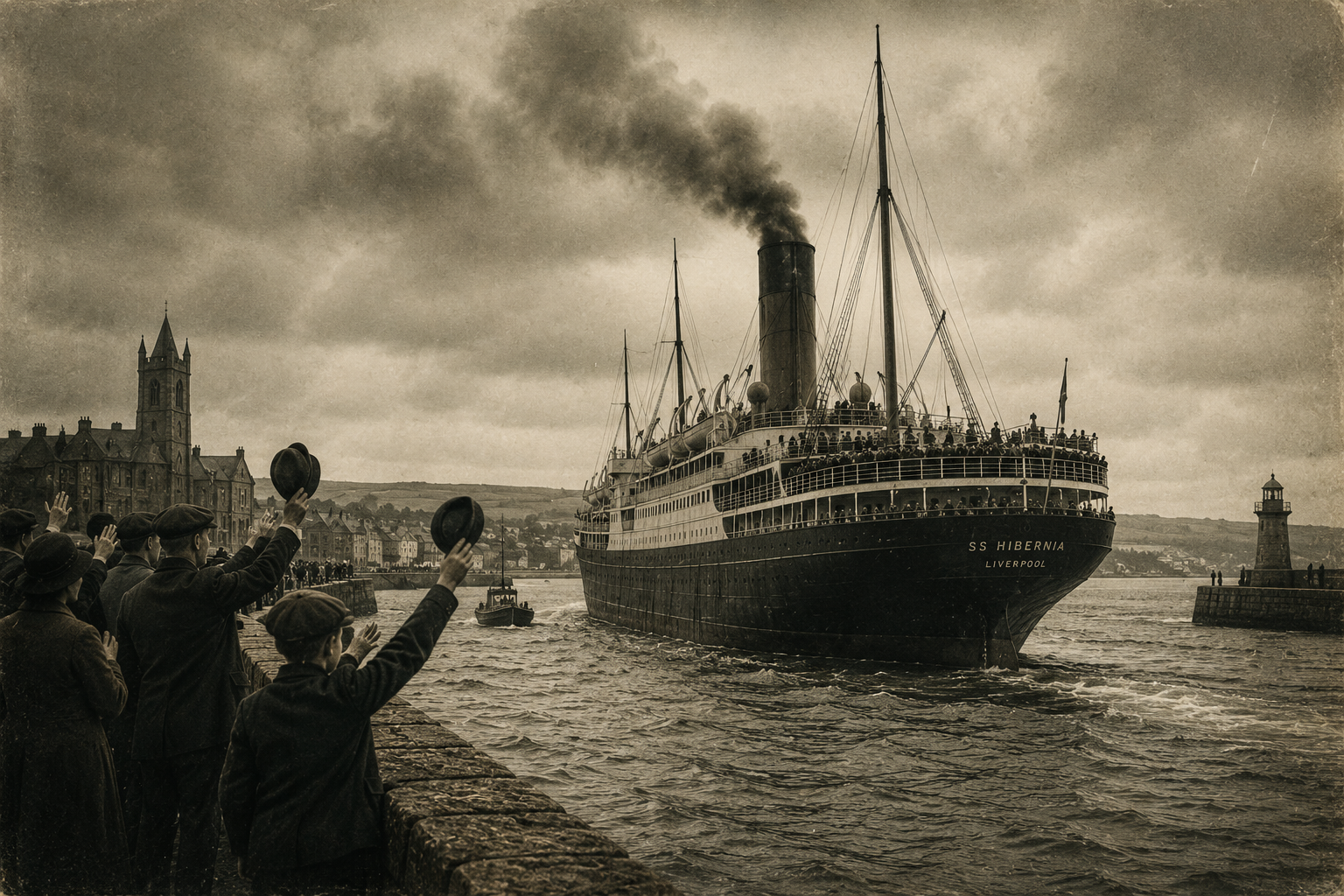
The famine of the 1840s remains the defining moment. In the space of a decade, Ireland's population dropped by more than two million — a million dead, a million gone. Those who left sailed in coffin ships to Liverpool, New York, Boston, and beyond. They arrived with nothing and were met with suspicion, "No Irish Need Apply" signs, and tenement conditions that rivalled what they'd fled.
But they stayed. They built parishes and political machines, fire departments and labour unions. Within a generation, Irish communities had become fixtures of every major city in the English-speaking world.
The Twentieth Century Exodus
Emigration didn't end with the famine. Throughout the 1950s, Ireland hemorrhaged its young. Economic stagnation and limited opportunity pushed hundreds of thousands to England, where they built the motorways and hospitals that modern Britain depends on. The dance halls of Camden and Cricklewood became the social centres of a displaced generation.
The 1980s brought another wave. This time the destinations were broader — America still, but also Australia, the Middle East, and continental Europe. The "American wake," that peculiar Irish tradition of holding a party the night before someone emigrated, persisted well into living memory.
The Celtic Tiger and Return
The economic boom of the late 1990s reversed the flow for the first time in centuries. Emigrants came home. Immigrants arrived. Ireland, for a brief and dizzying period, became a destination rather than a departure point. It didn't last — the crash of 2008 sent another generation packing — but it changed something fundamental in how Ireland saw itself.
A Scattered Nation
Today, an estimated seventy million people worldwide claim Irish heritage. That's more than ten times the population of the island itself. The diaspora sustains connections through culture, sport, music, and an attachment to place that survives across oceans and generations. Emigration shaped Ireland, but it also shaped the world that received its people.