For decades, Irish coffee sat in a strange no man's land — too boozy for coffee lovers, too caffeinated for cocktail purists, and too often served badly to inspire devotion. That's changing. Across Dublin, London, New York, and beyond, bartenders and baristas are rediscovering a drink that, when made properly, is one of the great pleasures of the drinking world.
The Origin Story
The Irish coffee was invented in 1943 by Joe Sheridan, a chef at Foynes airbase in County Limerick. Foynes was a refuelling stop for transatlantic flying boats, and Sheridan created the drink to warm American passengers arriving in the damp Irish night. When a traveller asked if it was Brazilian coffee, Sheridan replied, "No, it's Irish coffee." The name stuck.
The drink crossed the Atlantic in the early 1950s, when Stanton Delaplane, a travel writer for the San Francisco Chronicle, brought the recipe to the Buena Vista Café. The Buena Vista claims to have served over forty million Irish coffees since then, and the drink became a staple of American bar culture — though often in degraded form, made with cheap whiskey and squirted cream.
What Makes a Good One
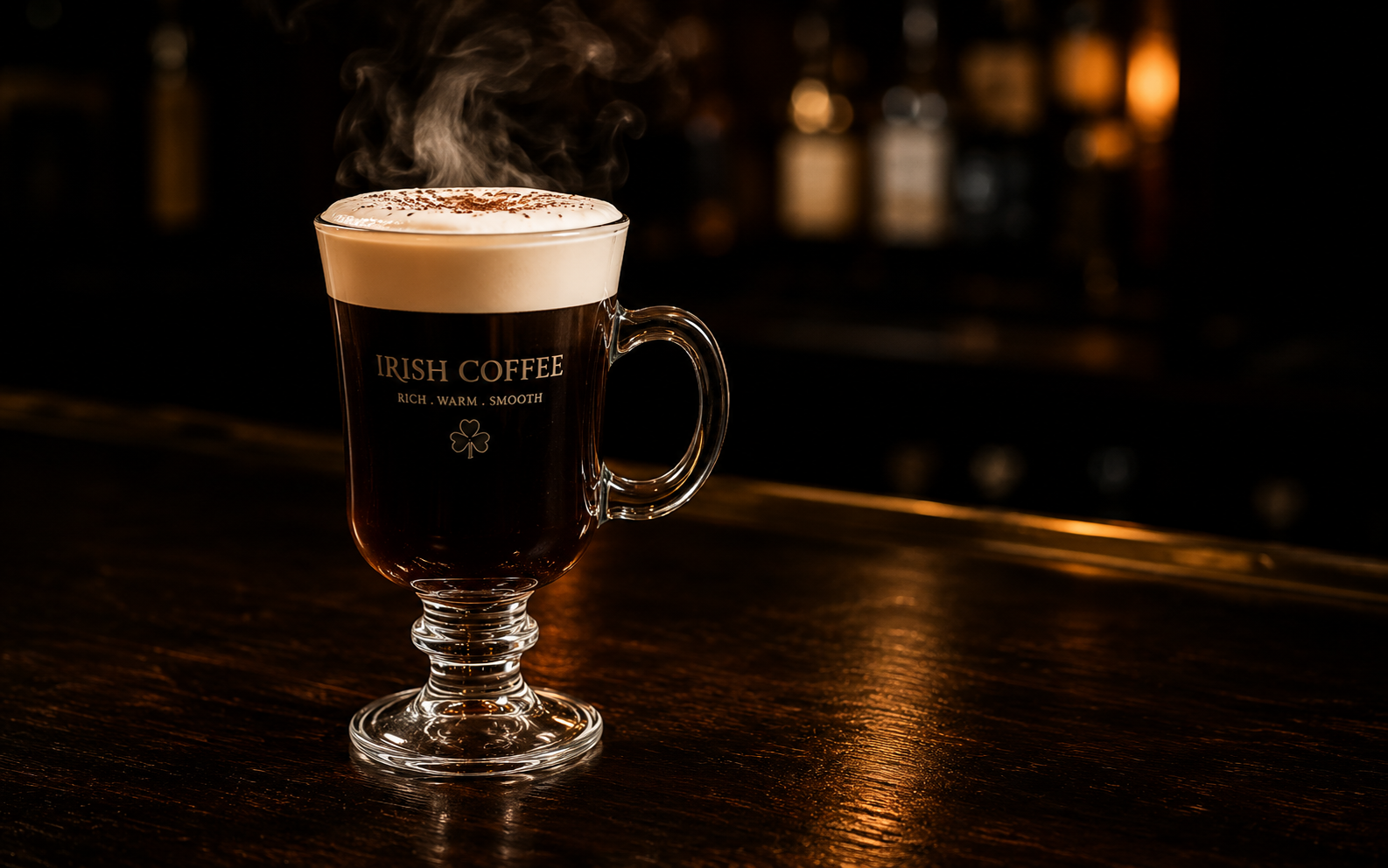
The original recipe is elegant in its simplicity: hot coffee, Irish whiskey, a spoonful of brown sugar, and a layer of lightly whipped cream floated on top. The cream is not stirred in. You drink the hot, sweet, whiskey-laced coffee through the cool cream, and the contrast of temperature and texture is what makes the whole thing work.
The details matter enormously. The coffee should be strong and freshly brewed — never instant. The whiskey should be smooth, not peaty. The cream should be barely whipped, thick enough to float but not so stiff that it becomes a lid. The glass should be warmed. Get any of these wrong and you have a mediocre drink. Get them all right and you have something close to perfect.
The New Wave
The craft cocktail revival has been kind to Irish coffee. Bartenders are experimenting with single-origin coffees, aged whiskeys, and house-made syrups. Some float the cream with the back of a spoon, as Sheridan did. Others use a shaker to achieve the right consistency. A few have introduced cold-brew versions for summer, which purists disdain but drinkers seem to enjoy.
Coffee shops have caught on too. In Dublin, you can now order an Irish coffee made with speciality beans, premium whiskey, and cream from a named dairy farm. It costs more than Joe Sheridan would have believed possible, but the quality is remarkable.
A Drink Worth Defending
The Irish coffee endures because it's honest. There are no exotic ingredients, no complicated techniques, no Instagram-friendly garnishes. It's warmth in a glass, invented by an Irishman to comfort strangers on a cold night. That story, like the drink itself, is hard to improve upon.